Guide
Toilet replacement cost: what changes the bill, and savings
Toilet replacement cost depends on the toilet, the plumber and what's under the old one. What a quote should include, and what a WaterSense model saves.
Updated October 26, 20265 min readReviewed by BathBudget Editorial Team, editorial review: primary sources checked and independently fact-checked
Toilet replacement cost comes down to three things: the toilet you choose, the plumber's labour, and what turns up under the old one. The toilet is the easy part to compare. The labour and the surprises are where quotes differ, so ask for them on separate lines. And if your old toilet is an older, inefficient model, the water a new one saves is part of the math.
What a toilet replacement involves
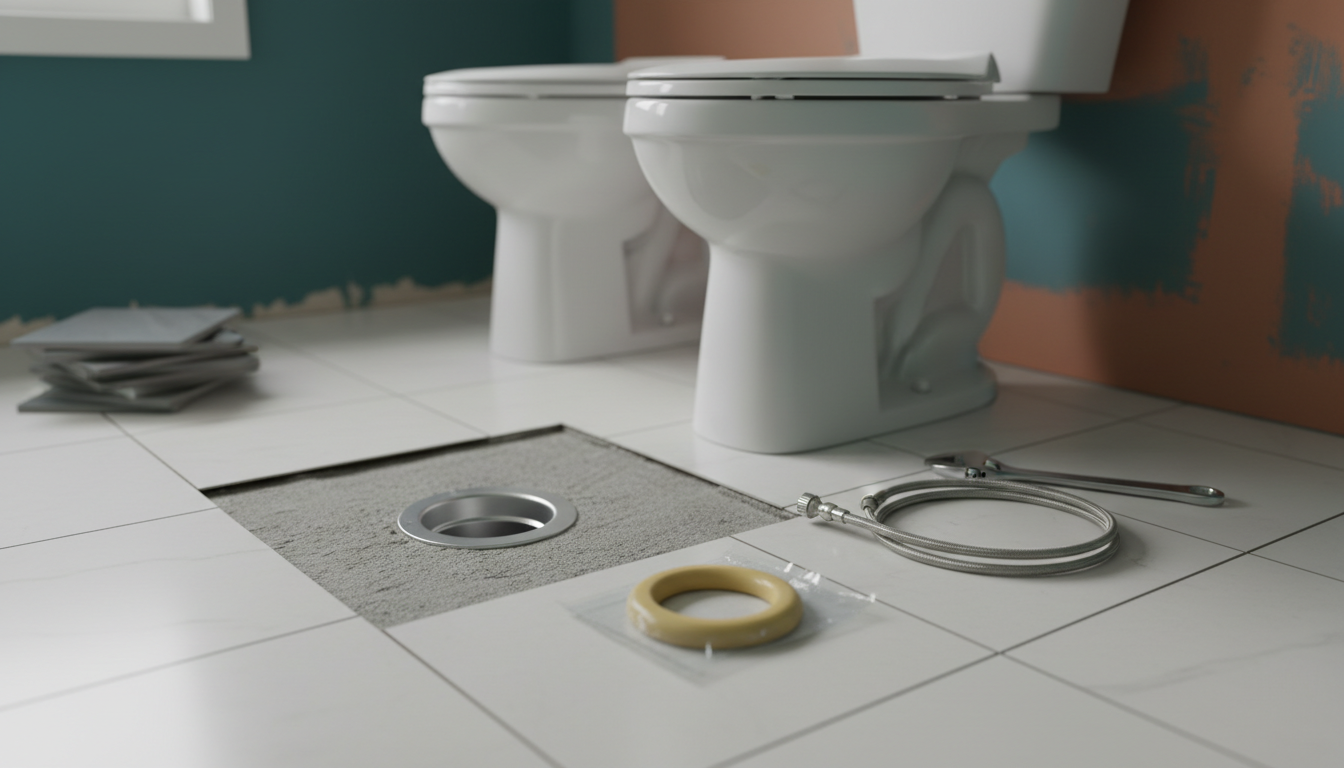
The job itself is short when nothing is wrong. The water is shut off at the valve behind the toilet, the tank and bowl are drained and unbolted, and the old toilet comes off the flange, the fitting in the floor that connects it to the drain. The new one goes on with a fresh seal, gets bolted down and levelled, and is connected to the water supply.
The variables are all things you can't see until the old toilet is up:
- The flange. If it's cracked, corroded or set at the wrong height, it needs repair or replacement before the new toilet can seal.
- The subfloor. A slow leak at the base can soften the floor under the toilet. That repair comes first, and it can mean lifting tile.
- The shut-off valve and supply line. An old valve that won't close fully, or a worn supply line, is often replaced at the same time.
- The fit. Toilets are made to sit a set distance from the wall behind them. Ask the plumber to measure yours and confirm the new model fits before you buy it.
- Haul-away. Whether removing and disposing of the old toilet is in the price.
A wet subfloor is the expensive surprise, and it isn't one to leave alone. The EPA's guide to mold and moisture says the key to mold control is moisture control, and that water-damaged areas should be dried within 24 to 48 hours.
What moves toilet replacement cost
Ask each plumber to quote the same toilet and the same scope, with these lines separate:
| Line | What to ask |
|---|---|
| The toilet | Is it supplied by them or by you? Which model, and does it fit your rough-in distance? |
| Labour | Is it a flat price for the swap, or hourly? What does it include? |
| Flange, floor and valve | How will each be priced if it needs work once the old toilet is up? |
| Disposal | Is removing the old toilet included? |
The Bureau of Labor Statistics notes that most states and some localities require plumbers to be licensed. The FTC's home improvement advice applies to small jobs too: get more than one estimate, consider only licensed and insured contractors, and check the licence with your state or county government.
If a toilet swap is one part of a bigger project, our estimator shows how a fixtures-only job compares with a fuller remodel in your state, with the line items a real quote has:
For how a whole-room budget breaks down, see what a bathroom remodel costs. When you have more than one quote, what a bathroom quote should itemise shows how to compare them.
What a WaterSense toilet saves
The part most toilet replacement cost guides skip is the running cost. EPA's WaterSense page on residential toilets sets out the numbers:
| Water per flush | |
|---|---|
| Older, inefficient toilets | As much as 6 gallons |
| Current federal standard | 1.6 gallons |
| WaterSense label | 1.28 gallons or less |
EPA estimates that replacing old, inefficient toilets with WaterSense models can save nearly 13,000 gallons of water a year for a home, and more than $170 a year in water costs. Your own saving depends on your water and sewer rates, how many people use the toilet, and how much water your current one uses. If yours is recent and already meets the federal standard, the saving is smaller.
Before you buy, check whether your water utility offers a rebate. EPA's WaterSense rebate finder lists rebates on WaterSense labeled products by state. WaterSense itself doesn't give rebates, so read each program's terms before you buy.
Safety while you're at it
A toilet swap is a good moment to think about who uses the room. The CDC's study of nonfatal bathroom injuries, based on 2008 data, found that injury rates were highest in or around the tub or shower and next highest on or near the toilet, and it suggests a grab bar next to the toilet if needed. If someone in the house would benefit from one, ask the plumber or a handyman whether there's solid backing in the wall to anchor it.
When a toilet swap is really a bigger job
Sometimes the toilet is only the symptom. If the floor around it is soft, the ceiling below is stained, or the toilet has to move to a new spot, the job grows: the floor may have to come up, and moving a drain is plumbing work that may need a permit. Ask your local building department; do you need a permit to remodel a bathroom explains the pattern.
If you're redoing more of the room, the toilet is one line in a larger scope:
Bottom line
Toilet replacement cost is the toilet, the labour and whatever is waiting under the old one. Get those priced separately, confirm the new model fits, and check for a utility rebate before you buy. If your current toilet is an older, inefficient model, a WaterSense replacement also cuts the water bill every year after.
Common questions
What makes toilet replacement cost more than expected?
Usually what's under the old toilet: a damaged flange, a soft or rotted subfloor from a slow leak, or a shut-off valve that won't close. Ask the plumber how each of those is priced if they find it.
How much water does a WaterSense toilet save?
WaterSense toilets use 1.28 gallons per flush or less, against the federal standard of 1.6. EPA estimates that replacing older, inefficient toilets with WaterSense models can save nearly 13,000 gallons a year for a home, and more than $170 a year in water costs.
Are there rebates for a new toilet?
Some water utilities offer them. EPA's WaterSense rebate finder lists rebates on WaterSense labeled products by state; check it, and your own water utility, before you buy. WaterSense itself doesn't give rebates.
Do I need a licensed plumber to replace a toilet?
Rules vary by state and locality. The Bureau of Labor Statistics notes that most states and some localities require plumbers to be licensed, so ask your local building department what applies to the job you have in mind.
Sources
- EPA WaterSense: Residential toilets
- EPA WaterSense: Rebates on WaterSense labeled products
- EPA: A brief guide to mold, moisture and your home
- BLS Occupational Outlook Handbook: Plumbers, pipefitters, and steamfitters
- CDC MMWR: Nonfatal bathroom injuries among persons aged 15 years and older, United States, 2008
- FTC consumer advice: How to avoid a home improvement scam
By BathBudget Editorial Team. First published October 26, 2026. Advertiser disclosure
Keep reading