Guide
Bathtub liner: what it covers, what it hides, when it fits
A bathtub liner is a fitted shell set over your old tub. What it fixes, what it leaves behind the wall, how it compares with reglazing, and how it's sold.
Updated October 26, 20265 min readReviewed by BathBudget Editorial Team, editorial review: primary sources checked and independently fact-checked
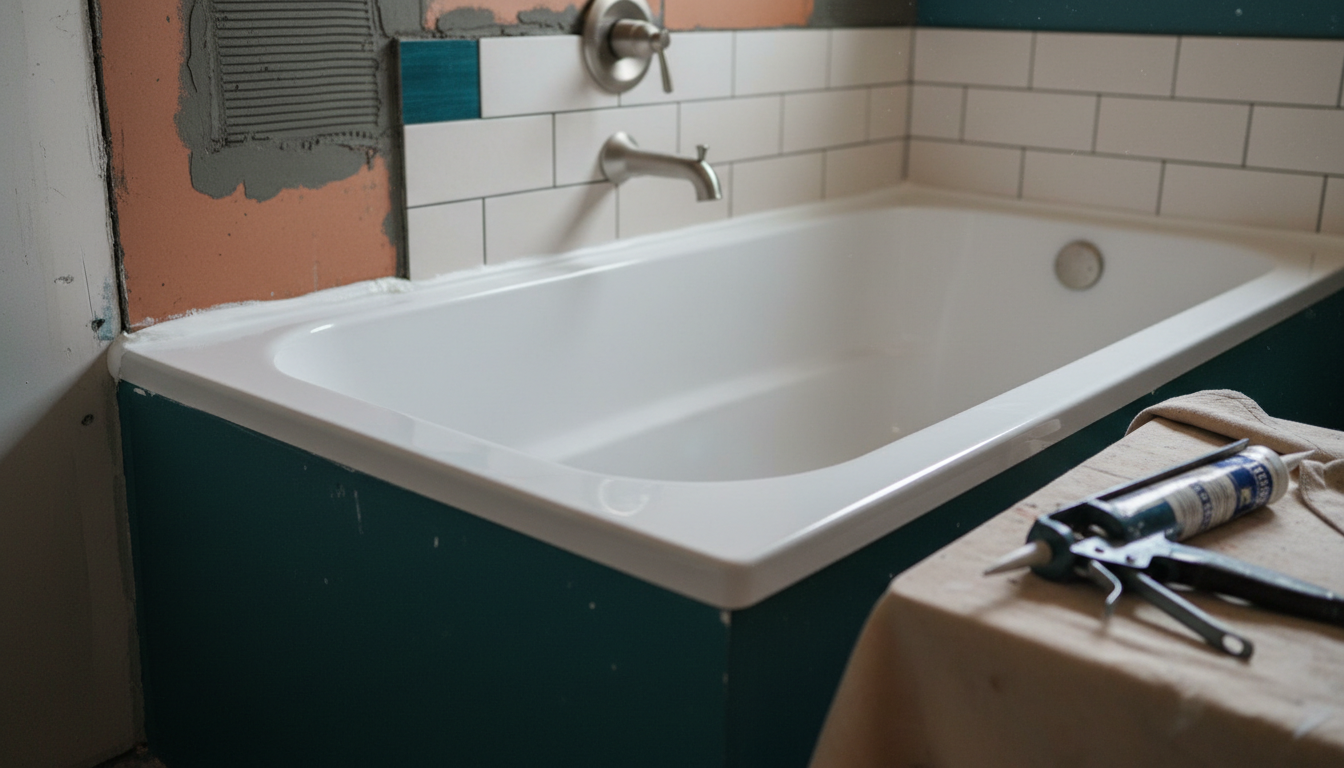
A bathtub liner is a new shell, usually acrylic or PVC, made to the shape of your old tub and fitted over it. It changes the surface you see and touch. It doesn't open the wall, move the drain or show anyone what is under the old tub, so it fits a tub that is sound and only looks worn.
What a bathtub liner is, and what it isn't
A liner is made to fit the tub it goes over, and it is fixed in place on top of the old one. Some quotes also include wall panels for the surround, so check which you're being offered.
What stays the same matters as much as what changes. The old tub is still there, underneath. The drain and the valve stay where they are. The wall behind the surround isn't opened, and nobody looks at the subfloor. That is why the work goes quickly, and it is also why a liner can't fix anything it covers.
Before you compare prices, ask the seller to put in writing:
- whether the quote covers the tub only, or the wall panels as well;
- whether any fittings (spout, drain trim, grab bars) are included;
- whether anyone will remove the old surround or look behind it;
- what the warranty covers, who backs it, and what voids it.
When a bathtub liner fits, and when it doesn't
A bathtub liner can make sense when the tub is solid and the problem is on the surface: stains, wear, chips in the finish, a colour you're tired of. It also suits a household that wants the work done with little disruption and expects to stay in the house a while.
It doesn't fit when the problem is underneath. The EPA's guide to mold and moisture says the key to mold control is moisture control, that mold can be hidden on the back side of drywall or paneling, and that if you clean up mold but don't fix the water problem, the mold will most likely come back. It also says not to paint or caulk over moldy surfaces. A shell fitted over a wet tub or wall leaves the water where it was. Signs to look for before anyone measures:
- stains or soft patches on the ceiling below the bathroom;
- tile around the tub that is loose, cracked or hollow-sounding;
- a floor next to the tub that flexes;
- a musty smell that doesn't go away after cleaning;
- a tub that is cracked through, not just chipped on the surface.
If any of those are there, the honest answer is to open the wall or floor and fix it. A liner can still go in after the repair, but fitted instead of it, a liner only hides the problem.
A liner also keeps the tub wall. If the real reason for the project is that someone in the house can no longer step over it safely, a new surface doesn't solve that. The CDC's study of nonfatal bathroom injuries found that falls caused 81.1 percent of the injuries it counted and that injury rates were highest in or around the tub or shower. Its suggestions are non-slip strips in the tub or shower and grab bars inside and outside it. If the step-over is the problem, a walk-in shower is the bigger version of the same fix, and what a walk-in shower costs compares the two ways to get one.
Bathtub liner, reglazing or a new tub
These are the routes for a worn tub, starting with the one that asks least of you:
None of them is right in every bathroom. Reglazing and a bathtub liner both treat the surface. Replacing the tub, or converting the opening to a shower, is the only one of the three that takes the old tub out and lets someone see the floor and wall around it. If you're weighing a liner system against a conventional conversion, run the comparison over the years you expect to stay:
What a one-day bath system really costs covers how liner and wall systems are priced, and what to ask so two quotes can be compared. If the plan turns into removing the tub, tub to shower conversion cost covers what moves that price.
How a bathtub liner is sold
If a liner is offered at an in-home visit, what happens at an in-home bath sales visit walks through that visit step by step. A federal rule and the FTC's advice are worth knowing before it starts.
You can cancel a sale made at home. The FTC's Cooling-Off Rule (16 CFR Part 429) covers sales of $25 or more made at your home, with a few exceptions, such as repair visits you asked for. According to the FTC's consumer guide, the rule also applies when you invited the salesperson. You have until midnight of the third business day after the sale to cancel, and Saturdays count as business days. The seller must give you two copies of a cancellation form, the contract can't include a waiver of your right to cancel, and if you cancel, the seller has 10 business days to refund your payments. How to cancel a bathroom contract explains how to count the days.
The usual contractor rules still apply. The FTC's home improvement advice is to get more than one written estimate, consider only licensed and insured contractors, confirm the licence with your state or county government, and not pay the full amount up front. It also lists a contractor asking you to get the required building permits as a warning sign.
Bottom line
A bathtub liner puts a new surface over a tub that is still sound. It's a fair choice for worn-looking tubs in dry bathrooms, and the wrong one when there is any sign of water, a cracked tub or a step-over that has become unsafe. Check for leaks first, compare it with reglazing and replacement on the same scope, and if you signed at home in a hurry, check whether the Cooling-Off Rule's three business days are still running.
Common questions
What is a bathtub liner?
A shell, usually acrylic or PVC, made to the shape of your existing tub and fitted over it. The old tub stays in place underneath, and the plumbing and the walls behind it aren't opened.
Can a bathtub liner be installed over a tub with water damage or mold?
Covering it doesn't fix it. EPA's guidance is that if you clean up mold but don't fix the water problem, the mold will most likely come back, and that moldy surfaces should not be painted or caulked over. Find and fix the source of the water first.
Is a bathtub liner better than reglazing?
They solve the same surface problem in different ways. Reglazing puts a new coating on the old tub; a liner puts a new shell over it. Neither one repairs a leak, a soft floor or a cracked tub, so ask each installer what their price includes and what voids the warranty.
Can I cancel a bathtub liner contract I signed at home?
In most cases. The FTC's Cooling-Off Rule covers sales of $25 or more made at your home, including visits you invited, with a few exceptions such as repair visits you requested. You have until midnight of the third business day after the sale to cancel, and Saturdays count as business days.
Sources
- EPA: A brief guide to mold, moisture and your home
- FTC consumer advice: Buyer's remorse — the FTC's Cooling-Off Rule may help
- eCFR: 16 CFR Part 429 — Cooling-Off Rule
- FTC consumer advice: How to avoid a home improvement scam
- CDC MMWR: Nonfatal bathroom injuries among persons aged 15 years and older, United States, 2008
By BathBudget Editorial Team. First published October 26, 2026. Advertiser disclosure
Keep reading