Guide
Shower valve replacement cost: access, parts and scalds
Shower valve replacement cost depends on whether only the cartridge changes or the valve body, and how the plumber reaches it. Plus the scald rule to ask about.
Updated October 26, 20265 min readReviewed by BathBudget Editorial Team, editorial review: primary sources checked and independently fact-checked
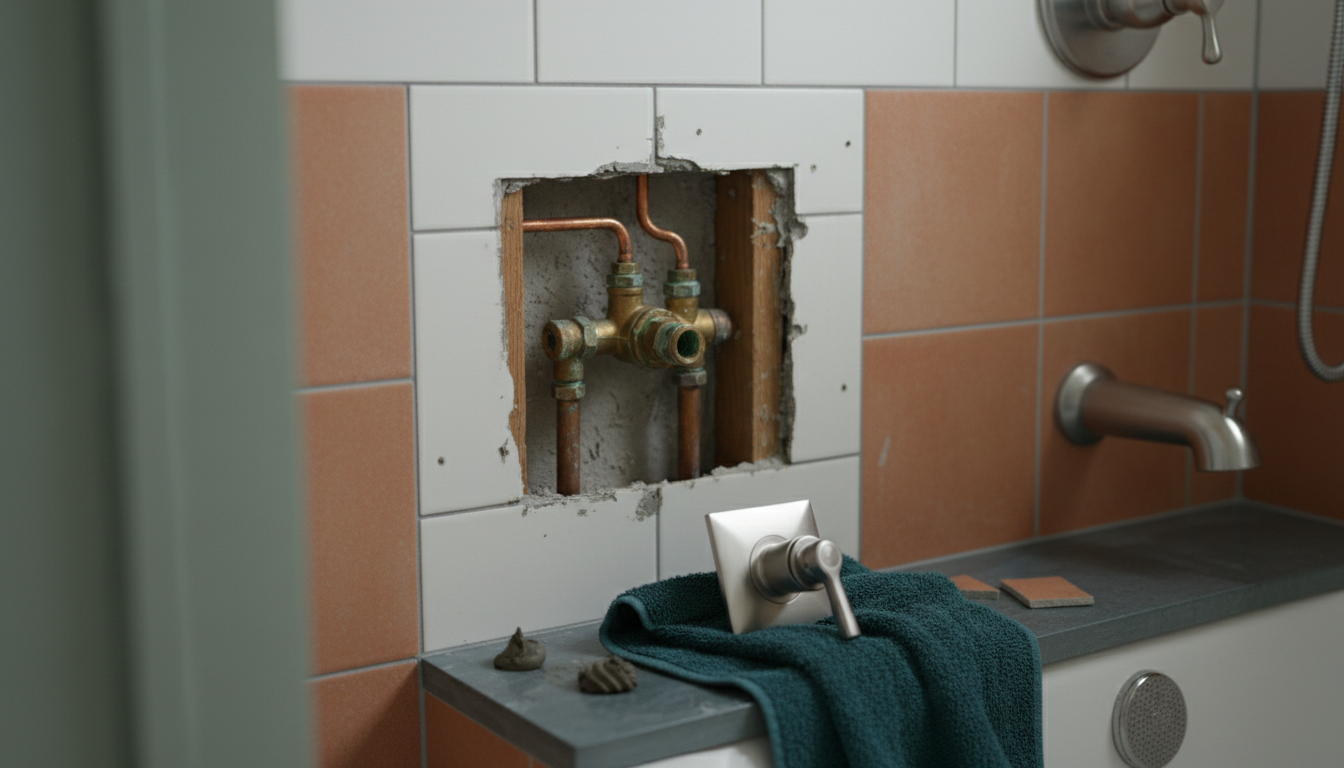
Shower valve replacement cost depends mostly on two things: whether the plumber can fix it by changing the cartridge from the front of the wall, or has to replace the valve body inside it, and how they get to it. A cartridge swap is a short job. Replacing the valve body usually means opening the wall through the tile or from the room behind, and then repairing it. Ask each plumber which of the two they're quoting.
Cartridge swap or a new valve body?
The shower valve is the part inside the wall that mixes hot and cold water. What you see from the shower, the handle and the round or square trim plate, is just the front of it. Problems can sit in either place:
- A drip, a stiff handle or temperature that drifts is often the cartridge, the replaceable part inside the valve. A plumber can usually change it from the front by taking off the handle and trim, without opening the wall.
- A leak inside the wall, a corroded or cracked valve body, or a valve that no longer has parts available usually means replacing the body itself. That means reaching the pipes behind the finished wall.
If you're changing the look of the shower, ask whether the new trim fits your existing valve. If it doesn't, a cosmetic update can turn into a valve-body replacement.
Before anyone quotes, ask them to look and tell you which job it is, and to put that in writing.
What moves shower valve replacement cost
These are the lines that change the bill:
| Line | What to ask |
|---|---|
| Diagnosis | Is it the cartridge or the valve body? Is there a charge to find out? |
| Parts | Which valve or cartridge, and is it an anti-scald type? |
| Access | From the front, through the tile, or from the room behind? |
| Wall and tile repair | Who repairs the opening, and does the price include matching tile or an access panel? |
| Water damage | What happens, and what it costs, if the wall is wet or rotted once it's open? |
| Permit | Is one needed, and who pulls it? |
Access is where quotes split. Some plumbers cut a neat opening in the tile and leave the tile repair to you or to a tile setter; others include it. Some skip the tile altogether, reaching the valve from a closet or bedroom on the other side of the wall and patching drywall there instead. Make sure the quote says who repairs the opening, and how.
Opening the wall is also the moment you find out whether the valve has been leaking. The EPA's guide to mold and moisture says the key to mold control is moisture control, that mold can be hidden on the back side of drywall or paneling, and that if you clean up mold but don't fix the water problem, the mold will most likely come back. Ask the plumber to show you what's behind the wall before it's closed.
If the valve is one part of a bigger bathroom job, our estimator gives a low, typical and high cost for the scope you pick, with the line items a real quote has:
The scald rule to ask about
The reason shower valves matter beyond comfort is scalding. CPSC's tap water scald guide says most of the injuries and deaths from tap water scalds are to the elderly and children under five. It urges households to lower their water heaters to 120 degrees Fahrenheit, and gives the timings:
| Water temperature | What CPSC says about exposure |
|---|---|
| 150°F | Third-degree burns for most adults in 2 seconds |
| 140°F | Burns in 6 seconds |
| 130°F | Burns in 30 seconds |
| 120°F | Five minutes could result in third-degree burns |
That's why some codes require shower valves that limit the water temperature. Orange County, California's remodel guideline for the 2022 California codes is one example: shower and tub-shower control valves shall be pressure balancing, set at a maximum of 120 degrees Fahrenheit. Requirements differ by place, so ask your building department what applies where you live, and ask the plumber to confirm in writing that the new valve meets it.
CPSC also says to hand-test water before bathing infants and young children. If anyone in the house is very young or elderly, mention it when you ask about the valve.
Who should do it
A cartridge swap is a common repair, but replacing a valve body means cutting into supply pipes inside a finished wall. The Bureau of Labor Statistics notes that most states and some localities require plumbers to be licensed. Ask your local building department whether the job needs a licensed plumber or a permit; do you need a permit to remodel a bathroom explains the general pattern. The FTC lists a contractor asking you to get the required building permits as a warning sign.
The FTC's other advice applies to small jobs too: get more than one estimate, consider only licensed and insured contractors, check the licence with your state or county government, and don't pay the full amount up front.
Replacing the trim and showerhead at the same time
If the wall is open or the trim is coming off anyway, it's a good moment to change the showerhead too. EPA's WaterSense showerheads use no more than 2.0 gallons per minute, and EPA estimates they can save the average family about 2,700 gallons a year. If the whole shower is due, shower replacement cost covers the lines to get itemised. If the bathroom needs more than that, the next step up is a full remodel:
The bathroom remodel cost guide explains the scope levels, and what a bathroom quote should itemise shows how to compare quotes once you have them.
Bottom line
Shower valve replacement cost turns on cartridge versus valve body and on how the wall gets opened and closed again. Get the job named in writing, make sure the quote covers the wall repair, and ask that the new valve meets your local anti-scald rule. With CPSC's 120°F recommendation in mind, it's also a good time to check your water heater setting.
Common questions
Why does shower valve replacement cost vary so much?
Because the job ranges from swapping a cartridge from the front of the wall to cutting into tile to replace the valve body. The second one adds wall repair and tile work, so ask each plumber which job they're quoting.
What water temperature does CPSC recommend to prevent scalds?
CPSC urges households to lower their water heaters to 120 degrees Fahrenheit. It says most adults will suffer third-degree burns from 150-degree water in two seconds, and that 140-degree water burns in six seconds.
Do codes require anti-scald shower valves?
Some do. Orange County, California's remodel guideline for the 2022 California codes, for example, says shower and tub-shower control valves shall be pressure balancing, set at a maximum of 120 degrees Fahrenheit. Ask your building department what applies where you live.
Do I need a licensed plumber to replace a shower valve?
Rules vary. The Bureau of Labor Statistics notes that most states and some localities require plumbers to be licensed. Ask your local building department whether the job needs a licensed plumber or a permit.
Sources
- CPSC: Avoiding tap water scalds (Publication 5098)
- OC Public Works (Orange County, CA): Residential bathroom remodel requirements, 2022 California codes
- BLS Occupational Outlook Handbook: Plumbers, pipefitters, and steamfitters
- EPA: A brief guide to mold, moisture and your home
- EPA WaterSense: Showerheads
- FTC consumer advice: How to avoid a home improvement scam
By BathBudget Editorial Team. First published October 26, 2026. Advertiser disclosure
Keep reading