Guide
How to remodel a bathroom: the order of work, step by step
How to remodel a bathroom in the right order: scope, quotes, licence, permit, demolition, rough-in, inspection, tile, fixtures, and which steps to DIY.
Updated October 14, 20267 min readReviewed by BathBudget Editorial Team, editorial review: primary sources checked and independently fact-checked
How to remodel a bathroom comes down to doing things in the right order. Decide the scope, price it, hire and paper it, and only then start demolition, rough-in, inspection, waterproofing, tile and fixtures. Most of the expensive mistakes come from doing a step early, like ordering tile before the scope is fixed or closing a wall before anyone has looked at the pipes behind it.
Step 1: Decide the scope before anyone quotes
Scope sets the price more than anything else. Surfaces only, a tub swap on the same drain, a full gut in the same layout, or a gut that moves plumbing are four different jobs. The pillar guide on what a bathroom remodel costs walks through each level. If you're working out how to remodel a bathroom on a budget, this is where the money gets decided: write your scope down in one paragraph, and choose the tile, vanity and fixtures now. A selection made after demolition starts can hold up the whole job.
Before you settle on a full remodel, look at the smaller options, in this order:
Step 2: Get quotes on the same scope, then check the licence
Send the same written scope to each contractor, so the prices you get back are for the same job. The FTC's home improvement advice is to get multiple estimates, not to automatically choose the lowest bidder, to consider only contractors who are licensed and insured, and to confirm the licence with your state or county government. What a bathroom quote should itemise covers which lines a real quote should carry.
Step 3: Sign a written contract and get the permit
The FTC says the contract should show the contractor's name, address, phone number and licence number, an estimated start and completion date, and any promises made in conversation, with no blank spaces left. Don't pay the full amount up front, and hold the final payment until the work is done and you're satisfied. If you signed at home, you generally have three business days to cancel. How to cancel a bathroom contract explains how to count them.
Ask your local building department whether this job needs a permit; do you need a permit to remodel a bathroom explains the pattern. One warning from the FTC is worth knowing: a contractor who asks you to get the required building permits is on its list of warning signs.
Step 4: Demolition, and lead paint in older homes
Shut off the water and the power to the room before anything comes out. If the house was built before 1978, EPA says it may have lead-based paint, and if you can't tell the age, it's safest to assume the paint contains lead.
The rule treats contractors and homeowners differently:
- A contractor who disturbs lead-based paint in a pre-1978 home must be EPA- or state-certified and use certified renovators who follow lead-safe work practices. No more than 60 days before starting, the firm must give the owner EPA's Renovate Right pamphlet, under 40 CFR 745.84.
- The small-job exemption won't cover a remodel that demolishes painted surfaces or disturbs more than 6 square feet of paint per room. Under 40 CFR 745.83, "minor repair and maintenance" means disturbing 6 square feet or less of painted surface per room indoors. It excludes work that involves demolition of painted surface areas, and jobs in the same room within the same 30 days count as one job.
- You, working on your own home, are generally not covered by the RRP rule. You are covered if you rent out all or part of the home. EPA still recommends lead-safe work practices for DIY projects to protect children from lead dust, and it recommends hiring a lead-safe certified contractor.
Demolition is also when you find out what's behind the tile. If there's mold or wet framing, fix the water source before anything else. EPA's guide to mold and moisture says the key to mold control is moisture control, that wet areas should be dried within 24 to 48 hours, and that a homeowner can usually clean up a moldy area of less than about 10 square feet. For anything larger it points to its professional remediation guidance.
Step 5: Rough-in plumbing and electrical
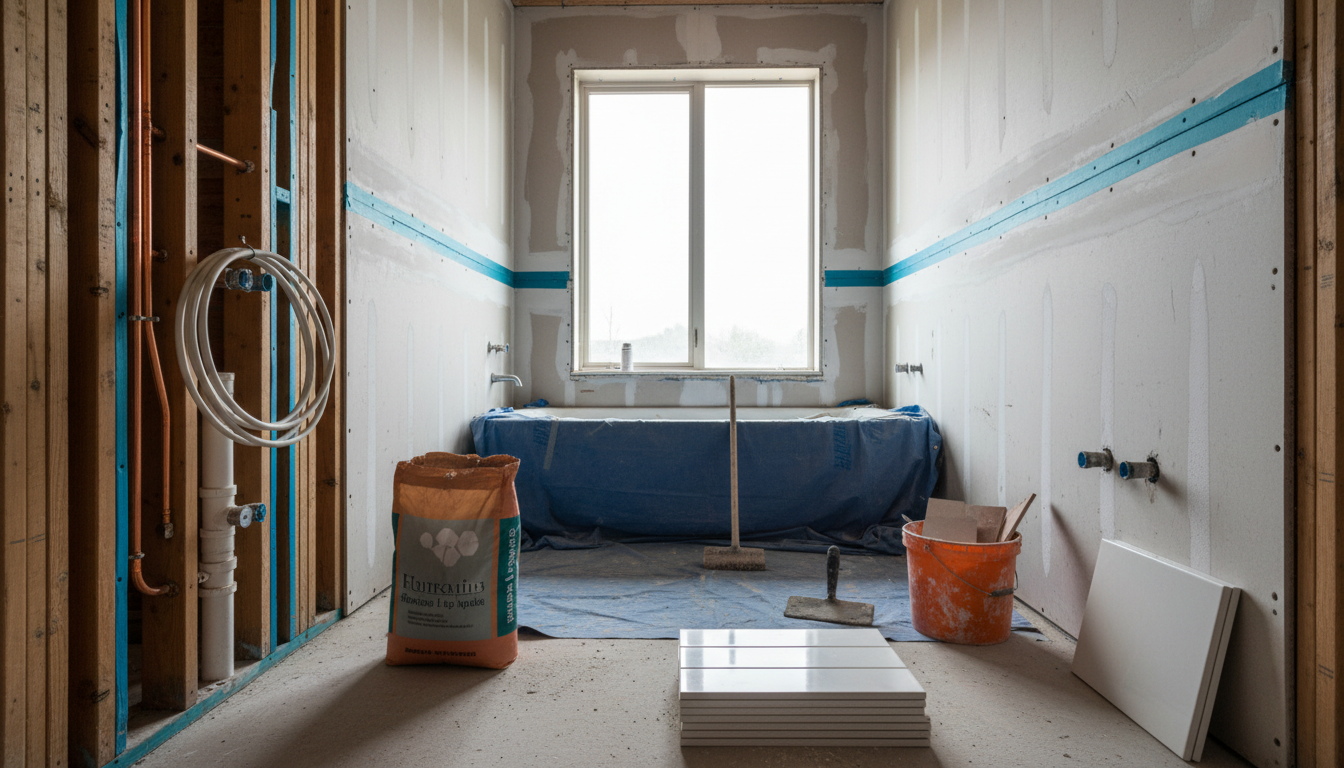
Rough-in is the pipes, drains, boxes and wiring that go inside the walls and floor before they are closed up. This is the step where licensing usually matters. BLS notes that most states and some localities require plumbers to be licensed and that most states require electricians to be licensed, and the requirements vary by state.
On the electrical side, bathroom receptacles should have ground-fault protection. CPSC's GFCI fact sheet notes that the National Electrical Code has required GFCI protection for bathroom receptacles since 1975, and that the code typically applies only to new construction and major renovations. An older bathroom may not have it, and a remodel is the time to add it.
Step 6: Inspection before the walls close
If the job has a permit, ask the building department when you get it which inspections it needs and at what stage. Rough-in work is much easier to check while the walls are still open. Don't let anyone hang board over pipes or wiring that still need an inspector's sign-off. Each inspection is also one of the waits that stretches the calendar, which is covered in how long a bathroom remodel takes.
Step 7: Backer board and waterproofing
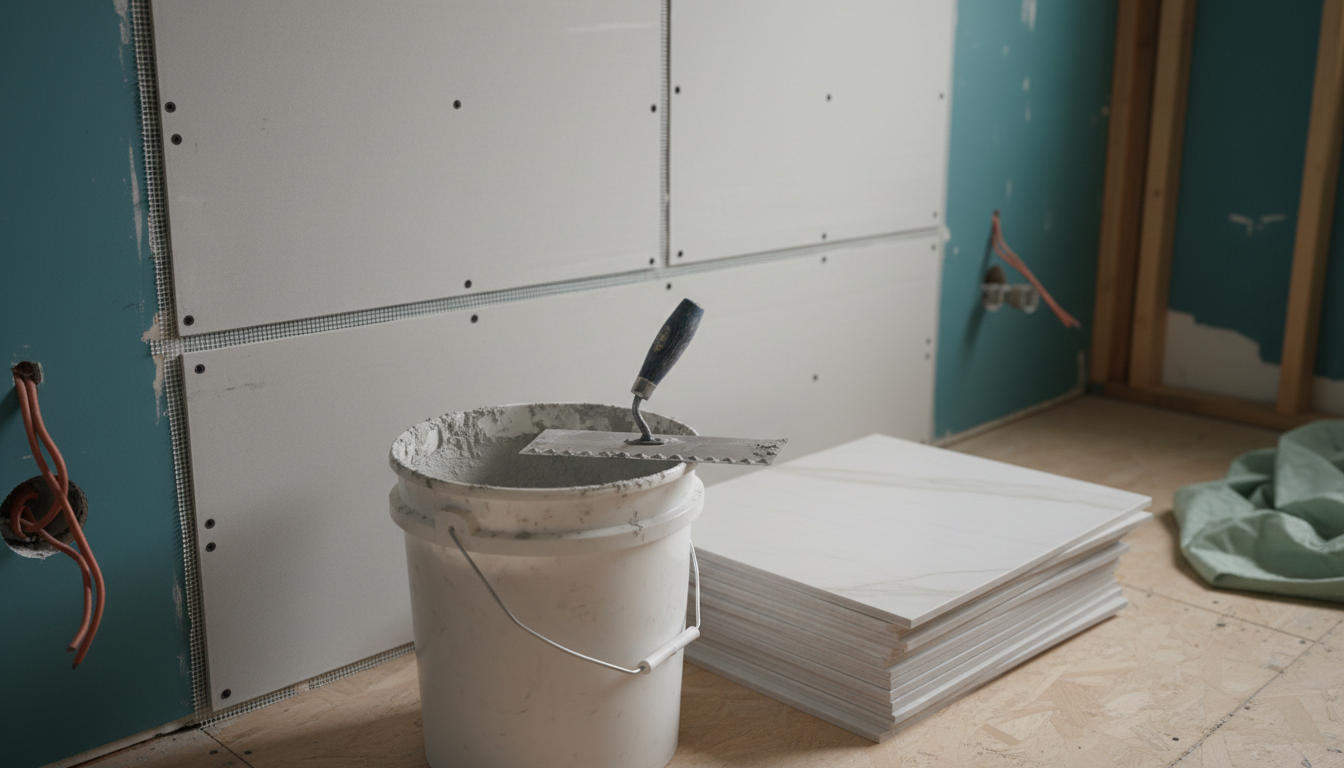
The backer board and the waterproofing layer go up around the tub or shower. Ask how long the product needs before tile can go on. Nobody sees this layer once the tile is on, which is exactly the problem: a shower can look perfect for a year while water gets past a gap behind it. Ask the contractor what waterproofing system they use and whether you can see it before tile starts. If you're doing this part yourself, follow the manufacturer's instructions for that product exactly.
Step 8: Tile, then fixtures
Tile and grout come next, once the waterproofing is ready under the product's instructions. Then the vanity, toilet, faucets, shower trim, lights and fan go in. The toilet usually goes in late, so it doesn't get damaged while other work goes on around it. If you're choosing faucets, a WaterSense-labeled bathroom faucet flows at a maximum of 1.5 gallons per minute, against a standard 2.2.
Step 9: Final inspection and the last payment
If there's a permit, ask the building department what the final inspection covers, and treat the job as unfinished until it passes. Make that, and a walk-through with a written list of fixes, the condition for the last payment, which matches the FTC's advice to hold the final payment until the work is done.
How to remodel a bathroom yourself: the steps a DIYer can take on
| Step | Realistic to DIY? | Why |
|---|---|---|
| Scope, selections, quotes | Yes | This is the homeowner's job either way |
| Demolition | Often, with care | In a pre-1978 home, use lead-safe practices; shut off water and power first |
| Plumbing and electrical rough-in | Usually a licensed trade | Most states license electricians, and most states and some localities license plumbers |
| Backer board and waterproofing | Possible, with care | Mistakes here are hidden and expensive |
| Tile | Possible, slow | Needs patience |
| Painting, accessories | Yes | Low risk |
Doing it yourself is mostly a question of which rows you keep. Whoever does the work, the order stays the same.
Bottom line
If you take one thing from this guide, make it the order: paperwork first, then build from the inside out, and don't cover anything until someone has checked it. Price your scope against what a bathroom remodel costs, and for the electrical and plumbing work, a licensed trade in your state is the right call.
Common questions
What is the right order to remodel a bathroom?
Decide the scope, get quotes on that scope, check the contractor's licence, sign a written contract and get any permit, then demolish, rough in the plumbing and electrical, have it inspected if a permit requires it, put up backer board and waterproofing, tile, set the fixtures, and finish with a final inspection.
Which parts of a bathroom remodel can I do myself?
Planning, painting, accessories and often demolition are realistic for a careful homeowner. BLS notes that most states require electricians to be licensed, and most states and some localities require plumbers to be, so moving pipes or wiring usually belongs to a licensed trade.
Does the lead paint rule apply if my house was built before 1978?
EPA's RRP rule requires contractors who disturb lead-based paint in pre-1978 homes to be lead-safe certified. It generally does not apply to homeowners working on their own home, though EPA still recommends lead-safe work practices, and it does apply if you rent out all or part of the home.
Do bathroom outlets need GFCI protection?
In a remodel, plan for it. CPSC notes that the National Electrical Code has required GFCI protection for bathroom receptacles since 1975, though the code typically applies only to new construction and major renovations, so an older bathroom may not have it.
What should I do if I find mold or rot during demolition?
Fix the water source first. EPA says the key to mold control is moisture control, and that a homeowner can usually clean up an area under about 10 square feet; for larger areas it points to its professional remediation guidance.
Sources
- EPA: Renovation, Repair and Painting Program for do-it-yourselfers
- EPA: Lead Renovation, Repair and Painting Program rules
- eCFR: 40 CFR 745.83 — Definitions (renovation, minor repair and maintenance)
- eCFR: 40 CFR 745.84 — Information distribution requirements
- CPSC fact sheet: What is a GFCI?
- FTC consumer advice: How to avoid a home improvement scam
- BLS Occupational Outlook Handbook: Plumbers, pipefitters, and steamfitters
- BLS Occupational Outlook Handbook: Electricians
- EPA: A brief guide to mold, moisture and your home
- EPA WaterSense: Bathroom faucets
By BathBudget Editorial Team. First published October 14, 2026. Advertiser disclosure
Keep reading