Guide
Bathtub replacement cost: what really moves the price
Bathtub replacement cost depends less on the tub than on the tile, drain, valve, floor and permit around it. What a quote should cover, and cheaper routes.
Updated October 26, 20265 min readReviewed by BathBudget Editorial Team, editorial review: primary sources checked and independently fact-checked
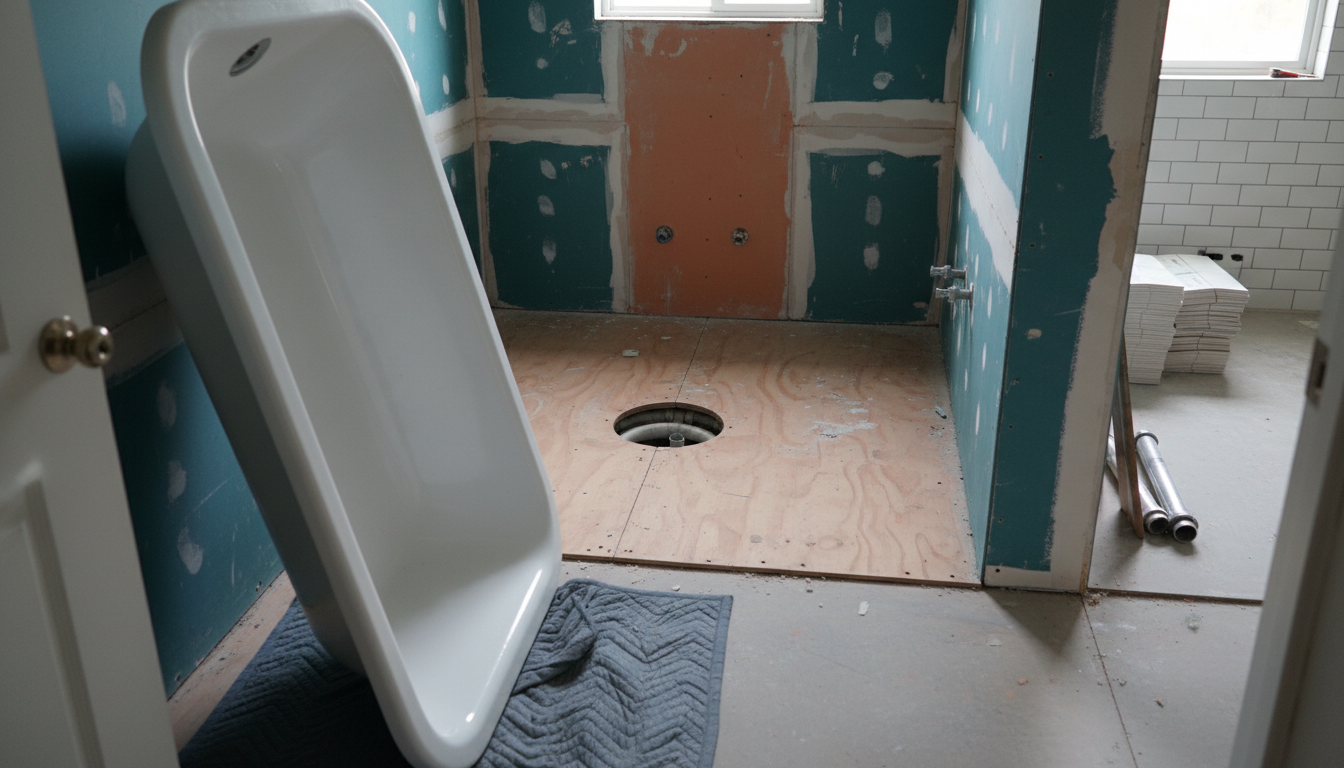
Bathtub replacement cost is mostly the work around the tub, not the tub itself. Getting the old one out, repairing the wall and tile it was set into, connecting the drain, and fixing whatever the old tub was hiding usually decide the bill. That's why two quotes for "a new tub" can be far apart, and why a quote that lists those parts separately is worth more than a single number.
What a bathtub replacement involves
A built-in tub is usually set into the wall framing, with tile or a surround lapped over its edge. Taking it out generally means cutting into that tile or surround, disconnecting the drain and overflow, and carrying a heavy, awkward object out through the house. Putting a new one in means levelling and supporting it, connecting the drain, and rebuilding and resealing the wall where it meets the new tub.
So a bathtub replacement touches several trades, even when the layout stays the same. That is the main reason the price is hard to pin down from a phone call: nobody knows what condition the floor, wall and pipes are in until the old tub is out.
Our estimator gives a low, typical and high cost for the scope you pick, with the line items a real quote has. Use it to see where a tub swap sits between surface work and a full remodel in your state:
The bathroom remodel cost guide explains the scope levels the estimator uses and why labour is such a large share of the total.
What moves bathtub replacement cost
Ask every contractor to price the same scope, then compare these lines:
- The tub. The model and material you choose. Ask whether the price is for a tub they supply or one you buy, and who handles returns if it arrives damaged.
- Getting the old tub out. How they'll remove it, whether it has to be broken up, and whether disposal is included.
- The wall and tile around it. How much of the surround or tile they expect to remove and replace, and whether matching your existing tile is part of the price.
- The drain, overflow and valve. Whether new drain parts are included, and whether the shower valve is being replaced or reused. If the valve changes, ask how they'll reach it: through the wall, the tile or an access panel.
- The subfloor. What they'll do, and what it costs, if the floor under the tub is soft or rotted.
- Permit and inspection. Who pulls it, if one is needed, and whether its fee is in the price.
A licensed plumber usually handles the drain and supply work. The Bureau of Labor Statistics notes that most states and some localities require plumbers to be licensed. Ask which parts of the job a licensed trade will do and confirm the licence.
What a bathroom quote should itemise shows how to lay two quotes side by side once you have them.
What the old tub may be hiding
The day the old tub comes out is the day you find out what years of splashing and slow leaks have done. The EPA's guide to mold and moisture says the key to mold control is moisture control, and that if you clean up mold but don't fix the water problem, the mold will most likely come back. It also says water-damaged areas should be dried within 24 to 48 hours. If the subfloor or the framing behind the tub is wet or rotted, that repair comes before the new tub goes in, and it adds to the bill.
That's the main argument for replacement over a surface fix in an older bathroom: it fully exposes the floor and the wall. Ask the contractor to show you what they find before it's covered again.
Lead paint in older homes
If the house was built before 1978, painted walls and trim around the tub may contain lead. Under the EPA's Renovation, Repair and Painting rule, anyone paid to do work that disturbs paint in a pre-1978 home must be lead-safe certified. Minor repair and maintenance that disturbs six square feet or less of paint per room inside is excluded, but demolition of painted surfaces is always covered, whatever the area.
The rule generally doesn't apply to homeowners working on their own home, but the EPA's page for do-it-yourselfers still recommends hiring a lead-safe certified contractor. Ask for the firm's certification before work starts.
Replace it, refinish it, or line it
These are the three ways to deal with a worn tub, starting with the one that asks least of you:
Refinishing and a liner leave the old tub, the tile and the plumbing in place, which is why they cost less. They only change the surface. If the tub is cracked through, the floor next to it flexes, or there are signs of a leak, replacement is the route that deals with the cause. If someone in the house struggles to step over the tub wall, the CDC's study of bathroom injuries, based on 2008 data, is worth knowing: injury rates were highest in or around the tub or shower. In that case, a shower may serve you better than a new tub; tub to shower conversion cost covers that route.
Getting quotes you can compare
The FTC's home improvement advice applies here: get multiple estimates, consider only contractors who are licensed and insured, and confirm the licence with your state or county government. A written estimate should describe the work, the materials, the completion date and the price. Ask your local building department whether the job needs a permit; do you need a permit to remodel a bathroom explains the pattern, and the FTC lists a contractor asking you to get the required building permits as a warning sign.
Bottom line
Bathtub replacement cost is mostly removal, wall and tile repair, plumbing and whatever the old tub was hiding. Get those lines priced separately, ask how surprises will be handled, and check the lead rule in an older house. If the tub is sound and only looks worn, price refinishing or a liner against it before you decide.
Common questions
What makes bathtub replacement cost more than expected?
Usually what turns up around the tub once it's out: damaged subfloor, a drain or valve that needs replacing, and the tile that has to be redone around the new tub. Ask each contractor how they price those if they find them.
Do I need a permit to replace a bathtub?
It depends on your local building department and on what the job touches, so ask them before work starts. The FTC lists a contractor asking you to get the required building permits as a warning sign.
Does the lead paint rule apply to replacing a tub in an older house?
If the home was built before 1978 and a paid contractor disturbs painted surfaces, the firm must be lead-safe certified. The small-job exemption covers six square feet or less of paint per room inside and never covers demolition of painted surfaces.
Is refinishing cheaper than replacing a bathtub?
Refinishing leaves the tub, the tile and the plumbing where they are, so it avoids most of the work that drives a replacement price. It only changes the surface, though, so it can't fix a leak, a soft floor or a cracked tub.
Sources
- FTC consumer advice: How to avoid a home improvement scam
- EPA: Renovation, Repair and Painting Program, contractors
- EPA: Lead-safe renovations for DIYers
- EPA: A brief guide to mold, moisture and your home
- BLS Occupational Outlook Handbook: Plumbers, pipefitters, and steamfitters
- CDC MMWR: Nonfatal bathroom injuries among persons aged 15 years and older, United States, 2008
By BathBudget Editorial Team. First published October 26, 2026. Advertiser disclosure
Keep reading